










Greetings from DISG Secretariat
Dear Readers,
Hello, everyone. I am Masuo Kuremura, Chair of the DISG.
A series of major ASEAN-related meetings will begin in September, starting with the ASEAN-Japan Economic Ministers’ Meeting (AEM-METI) on September 20, followed by the AZEC+ Ministerial Meeting on October 8, and the ASEAN-Japan Summit and AZEC+ Summit in November. At the recent ASEAN Summit, amid growing uncertainty surrounding the Strait of Hormuz, economic resilience and the energy resilience that underpins it emerged as a major theme. As ASEAN seeks to chart its own path, it is increasingly important to advance industrial upgrading within the region and build a larger, more integrated regional market that is less dependent on the major markets of the United States and China. While it is important for ASEAN member states to lead these efforts themselves, Japan can work alongside them as a trusted partner.
We can also share with our ASEAN partners the experience Japan has accumulated through decades of industrial development and industrial policy. Strengthening energy resilience is another urgent priority for Asia as a whole. There is considerable scope for Japan and ASEAN to cooperate in areas including renewable energy, LNG, power grids, biofuels, and small modular reactors (SMRs). At the same time, we need to further strengthen the supply chains—particularly in the automotive sector—that we and ASEAN partners have built together over many years. The transition to the digital economy is equally important. Rather than relying solely on hyperscalers based in the major powers, it is essential to develop models for building AI applications and large language models (LLMs) tailored to ASEAN's local context, as well as to develop sovereign AI. From semiconductor cooperation and computing resources to the development of AI applications, Japan can work with ASEAN to build these capabilities in an open and non-exclusive manner. Innovation is another key area. As software and hardware increasingly converge, new DEEPTECH is becoming ever more important. By bringing together the strengths and expertise of Japan and ASEAN, we can generate new DEEPTECH innovations.
Through this combination of perspectives—spanning energy, supply chains, digital technology, and innovation—rather than any single approach, I believe Japan can contribute to ASEAN's own efforts to upgrade its economy and industries. I look forward to advancing ASEAN-Japan cooperation through the discussions and initiatives that will unfold during ASEAN Week beginning in September.
Best regards,
Masuo Kuremura
DISG Task Force Chair
Executive Director, JETRO Singapore
Special Advisor to the Minister of Economy, Trade and Industry
Foreign Minister Motegi's Attendance at ASEAN-related Meetings
Japan reaffirmed its commitment to ASEAN Centrality while advancing new cooperation initiatives in AI, energy security, maritime security, and regional resilience. Foreign Minister MOTEGI Toshimitsu attended the ASEAN-related Foreign Ministers' Meetings in Manila, the Philippines (July 21-24), deploying proactive multilateral diplomacy to maintain and strengthen a rules-based, free and open international order. Through key ministerial sessions including EAS, ARF, ASEAN-Japan, Mekong-Japan, and CEAPAD, Japan deepened its partnership with Southeast Asian nations across both economic and security domains.
● The 16th East Asia Summit (EAS) Foreign Ministers' Meeting
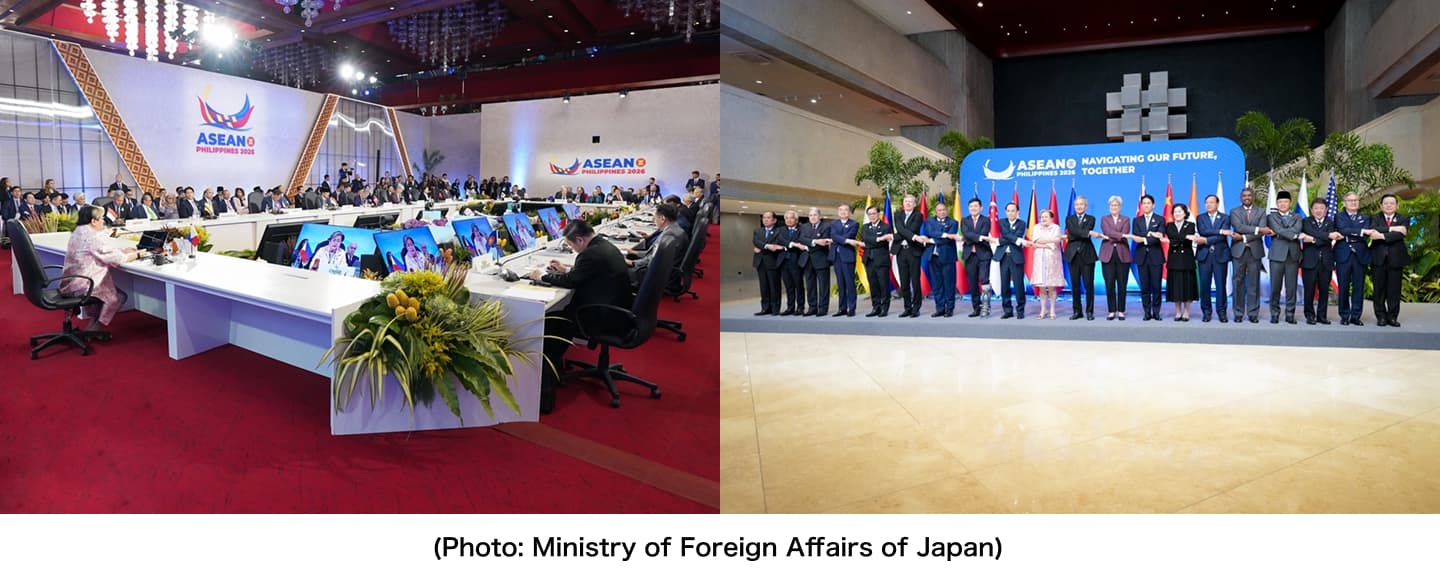
Minister Motegi reaffirmed Japan's full support for ASEAN Centrality, unity, the ASEAN Community Vision 2045, and the AOIP, underscoring the importance of a free and open international order based on the rule of law. He opposed unilateral attempts to change the status quo by force or coercion in the East and South China Seas, called for the COC to align with UNCLOS, urged North Korea's complete denuclearization, and pledged continued support for ASEAN's "Five-Point Consensus" on Myanmar. He also addressed online scams and stressed the importance of safe navigation in the Strait of Hormuz to strengthen energy security under the "POWERR Asia" framework.
● The 33rd ASEAN Regional Forum (ARF) Ministerial Meeting
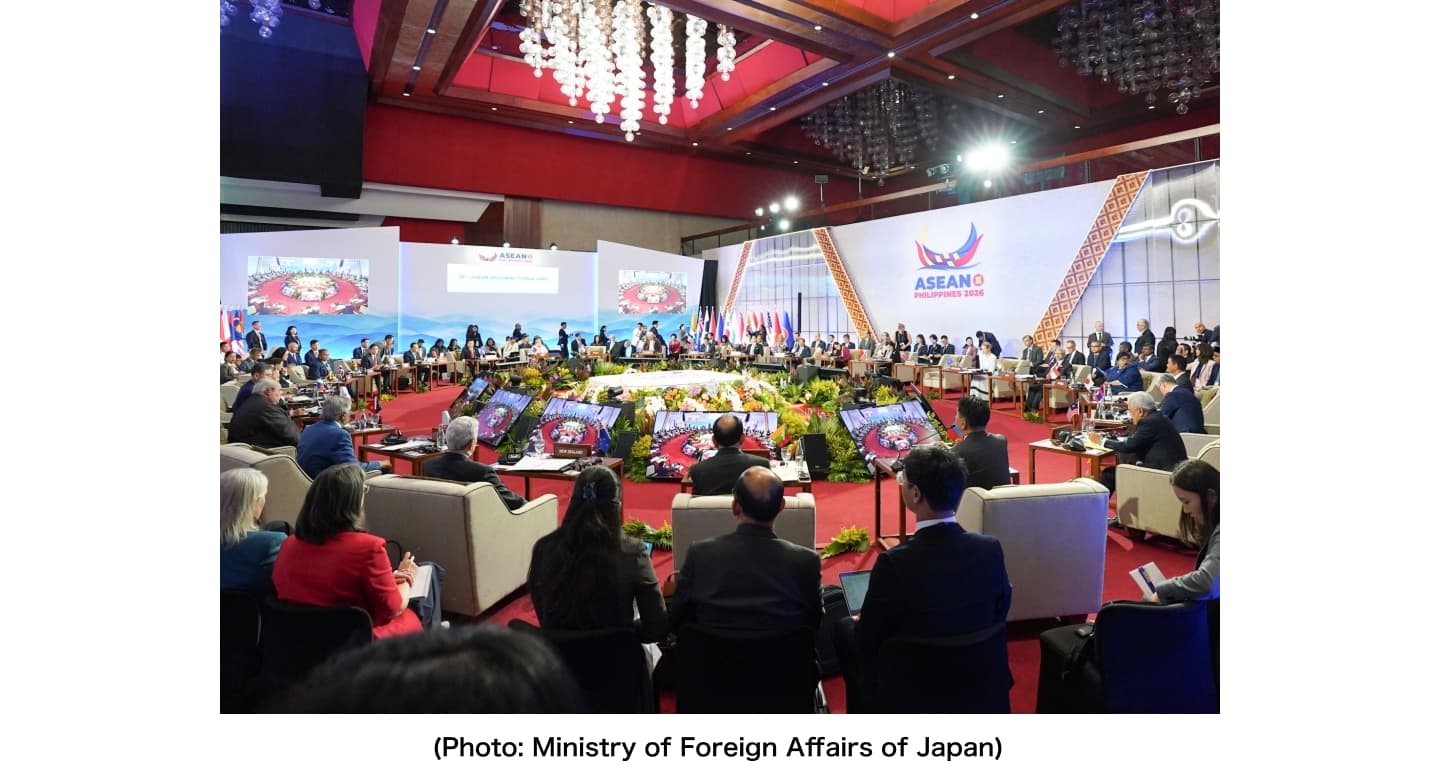
Minister Motegi pointed out that the security of Europe, the Middle East, and the Indo-Pacific are closely linked, highlighting the significance of further trust-building and preventive diplomacy. In addition to opposing unilateral attempts to change the status quo in the East and South China Seas, he condemned Russia's invasion of Ukraine as an outrage shaking the foundations of the international order. He also pushed for nuclear disarmament/arms control dialogues under the NPT and the universalization of the Hague Code of Conduct against Ballistic Missile Proliferation (HCOC).
● ASEAN-Japan Foreign Ministers' Meeting
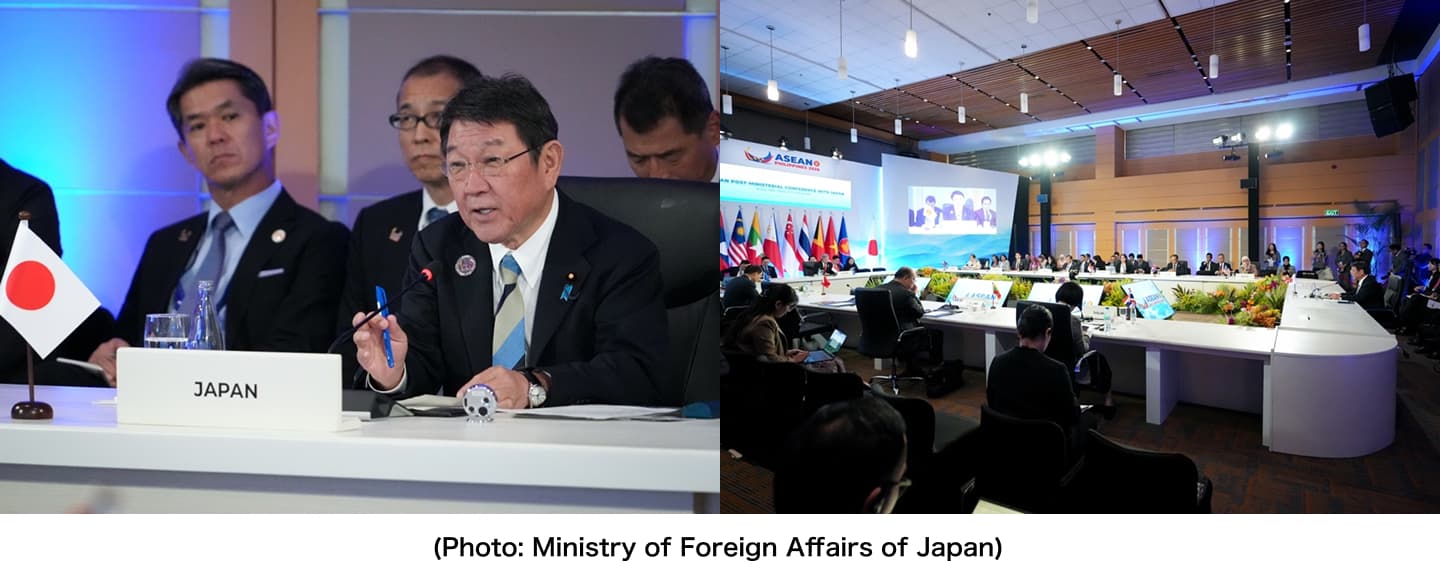
Co-chaired by Minister Motegi and Singaporean Foreign Minister Vivian Balakrishnan. To address challenges to the rules-based international order, Japan pledged to help regional partners build "autonomy" and "resilience". They concurred on three pillars: maritime patrol vessels and counter-fraud funding (Peace and Stability), the AI Co-Creation Initiative, Digital Corridor, and POWERR Asia/AZEC (Co-creation), and youth exchanges and JAIF's 20th anniversary (Heart-to-Heart).
● The 17th Mekong-Japan Foreign Ministers' Meeting
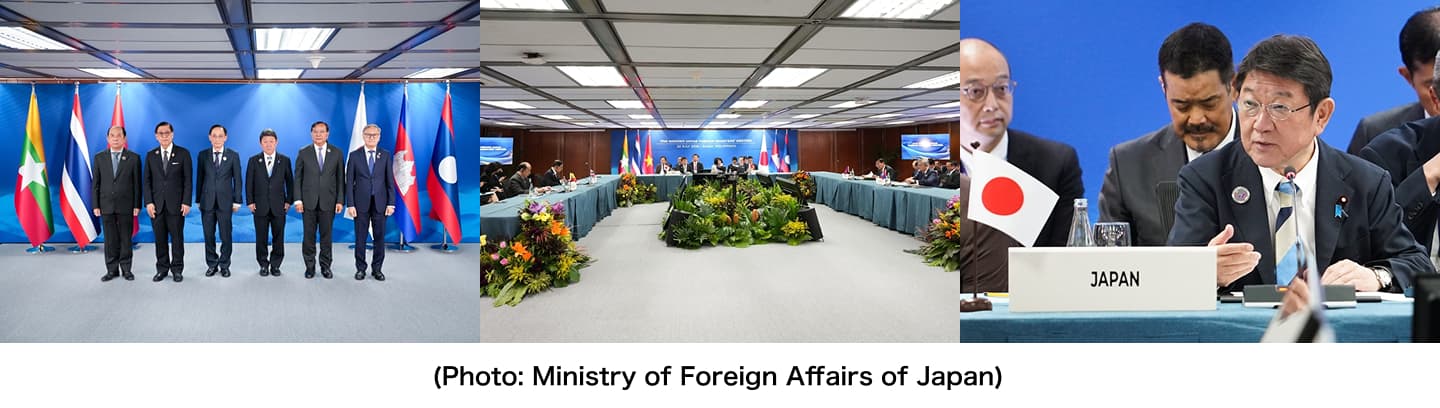
Co-chaired by Minister Motegi and Vietnamese Foreign Minister Le Hoai Trung, Japan proposed five priority areas to enhance the region's resilience and autonomy:
- Energy: Securing stable petroleum supply under the "POWERR Asia" framework and supporting power grid infrastructure.
- Cross-border Crime: Funding ASEANAPOL to establish fraud countermeasure centers and providing digital investigation training.
- Water Resource Management: Flood/drought countermeasures and water quality cooperation with the Mekong River Commission (MRC).
- Security: Cybersecurity support to counter North Korea's cyber asset theft.
- Connectivity: Transportation, AI/digital, maritime, and supply chain networks, plus support for the Cambodia-Thailand ceasefire implementation.
● The 5th CEAPAD Ministerial Meeting
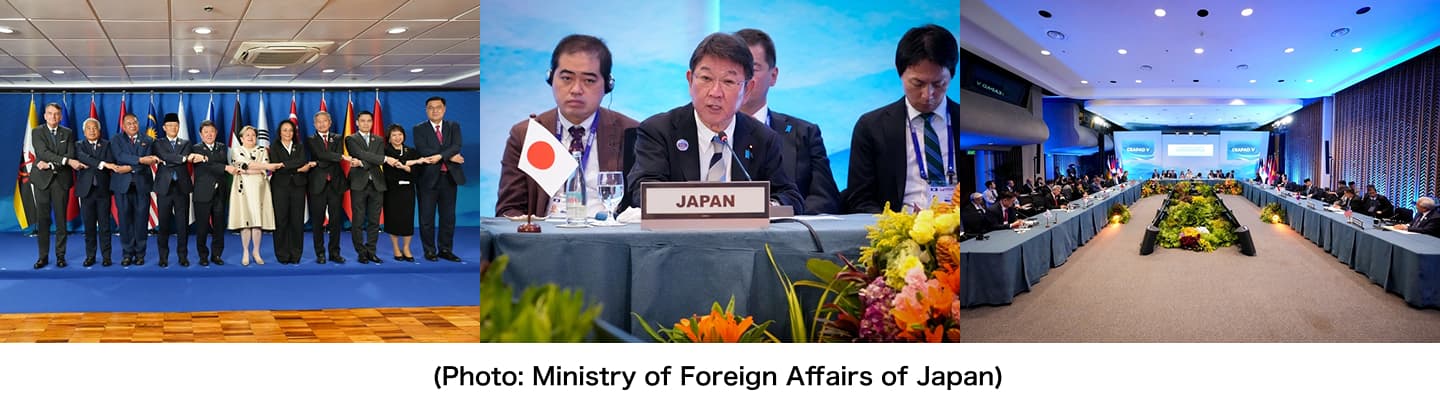
Co-chaired by Minister Motegi, Philippine Foreign Secretary Lazaro, and Palestinian Minister of Social Development Hamad. The meeting reaffirmed the importance of supporting Palestine's long-term capacity building. They announced the "CEAPAD Project List" compiling 47 capacity-building projects from 9 partner countries. Minister Motegi also pledged to further advance the development of the Jericho Agro-Industrial Park (JAIP).
- Foreign Minister MOTEGI's Attendance at the ASEAN-related Foreign Ministers' Meetings (July 21-24, 2026) (English) (LINK)
- The 16th East Asia Summit (EAS) Foreign Ministers’ Meeting (English) (LINK)
- The 33rd ASEAN Regional Forum (ARF) (English) (LINK)
- ASEAN-Japan Foreign Ministers’ Meeting (English) (LINK)
- Mekong-Japan Foreign Ministers’ Meeting (English) (LINK)
- Fifth Conference on Cooperation among East Asian Countries for Palestinian Development (CEAPAD) (English) (LINK)
Japan-Philippines Foreign Ministers' Meeting
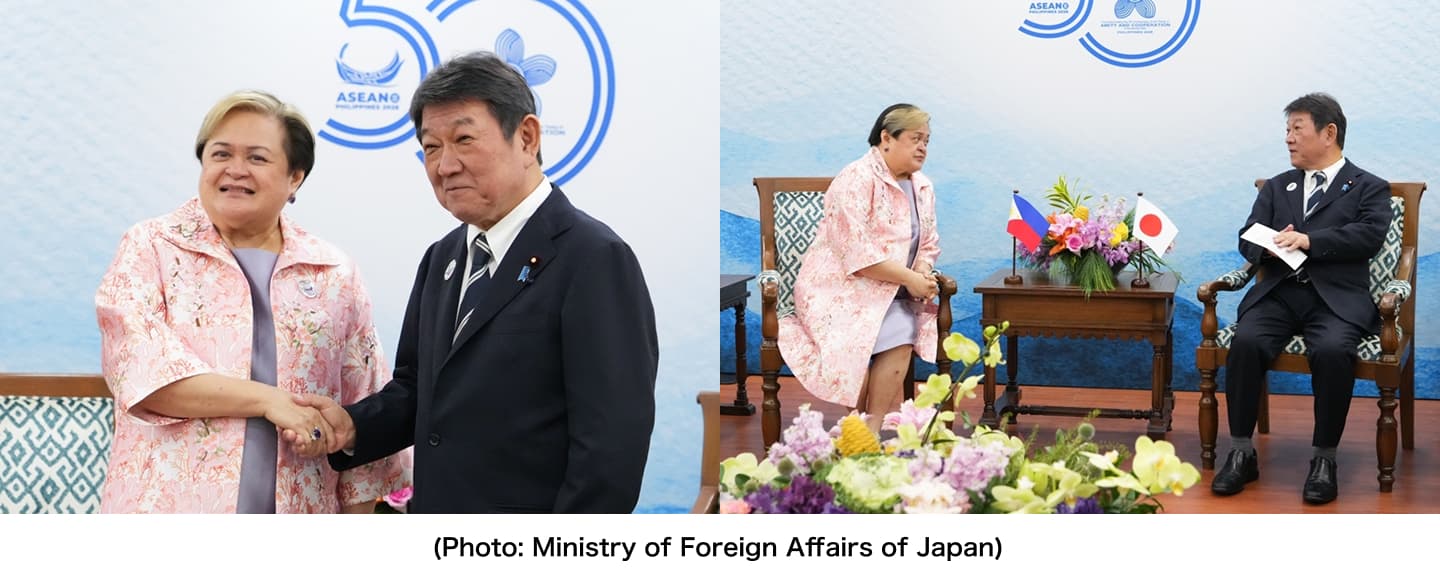
Held on the 70th anniversary of diplomatic relations between Japan and the Philippines, this meeting served as a strategic dialogue, reaffirming both countries' commitment to further making their "Comprehensive Strategic Partnership" multilayered toward the realization of the updated "Free and Open Indo-Pacific (FOIP)". Foreign Minister Motegi and Secretary of Foreign Affairs Maria Theresa Lazaro held a close exchange of views for approximately 30 minutes, concurring on evolving future bilateral relations in a sustained and multilayered manner.
● Entry into Force of ACSA and Defense/Development Cooperation
The two ministers welcomed the exchange of diplomatic notes for the entry into force of the Acquisition and Cross-Servicing Agreement (ACSA) between the Self-Defense Forces of Japan and the Armed Forces of the Philippines, and agreed to strengthen regional peace and stability through ODA and OSA.
● Cooperation in Regional Affairs and the Economic Sector
The ministers exchanged views on ASEAN cooperation and regional issues including the South China Sea, and discussed promoting bilateral economic cooperation.
- Japan-Philippines Foreign Ministers' Meeting (LINK)
Japan-Vietnam: Deputy PM Giang's Courtesy Call on Chief Cabinet Secretary KIHARA
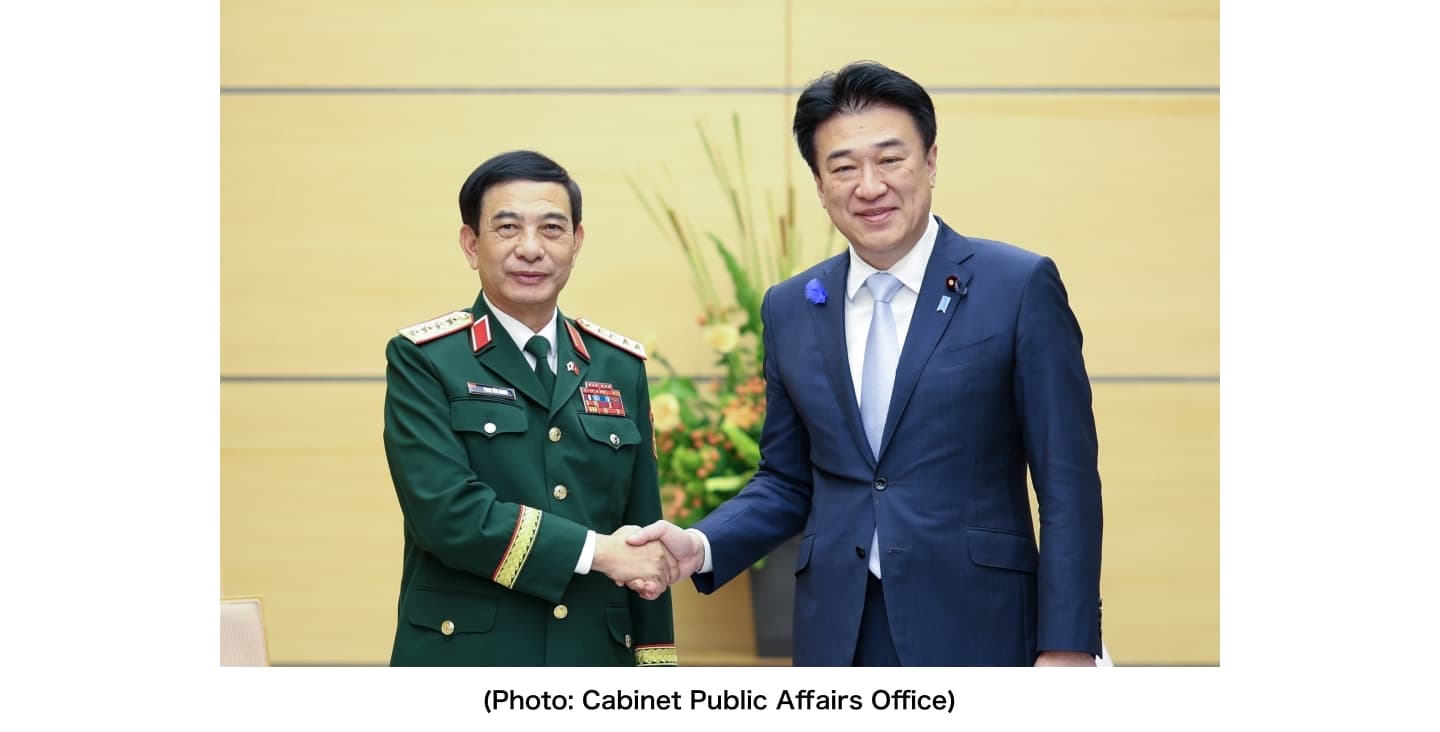
On July 13 in Tokyo, Mr. KIHARA Minoru, Chief Cabinet Secretary of Japan, received a courtesy call from H.E. Dr. Phan Van Giang, Deputy Prime Minister and Minister of National Defence of Viet Nam, who was visiting Japan. The two sides reaffirmed their commitment to further strengthening the Japan-Viet Nam "Comprehensive Strategic Partnership" toward realizing an updated "Free and Open Indo-Pacific (FOIP)."
● Welcoming High-Level Exchanges and Bilateral Cooperation
Chief Cabinet Secretary Kihara welcomed Deputy PM Giang's visit and expressed his wish to further strengthen the Comprehensive Strategic Partnership. Deputy PM Giang welcomed the close high-level exchanges between the two countries, most notably Prime Minister TAKAICHI Sanae's official visit to Viet Nam in May, and expressed his determination to continue strengthening bilateral cooperation, starting with the security field.
● Confirming Solidarity in Regional and International Affairs
The two sides confirmed their coordination on key regional and international issues, including the situation in the Middle East, the East and South China Seas, North Korea's nuclear and missile programs and the abductions issue, and the situation in Myanmar.
- Courtesy Call on Chief Cabinet Secretary KIHARA by H.E. Dr. Giang, Deputy Prime Minister and Minister of National Defence of Viet Nam (LINK)
Editorial Note


